We all know the hustle. You post a beautiful product picture on your WhatsApp Status or Instagram, and within minutes, the DMs start rolling in.
“How much?” “Is this available?” “Do you deliver to Kasoa?” “Last price?”
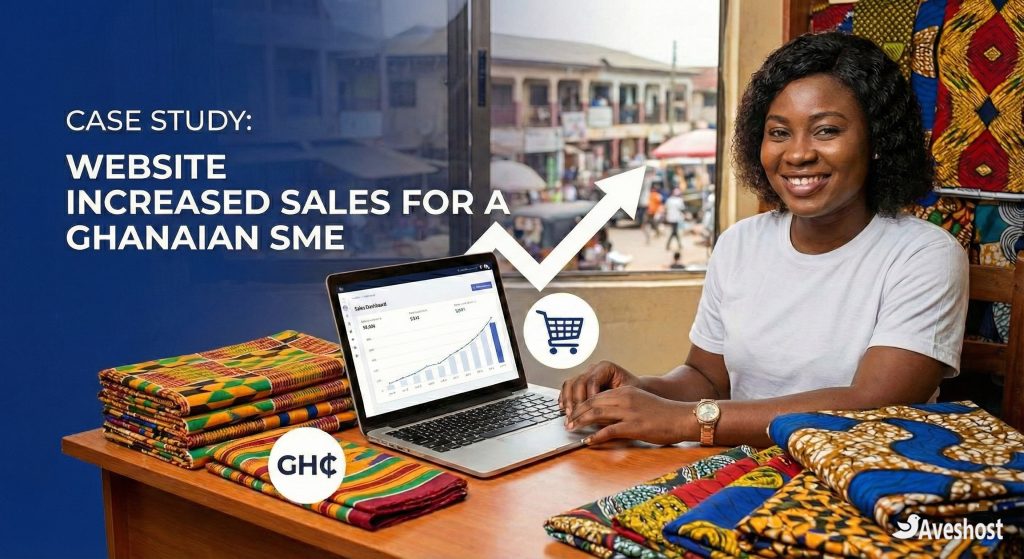
For a long time, this was the daily reality for “Akosua’s Ashanti Fabrics,” a small business based in Kumasi dealing in quality Kente and African prints. Business was good, but it was tiring. Akosua spent more time replying to messages than actually fulfilling orders. She was losing sales because she couldn’t reply fast enough, and tracking payments via Mobile Money screenshots was becoming a nightmare.
Table of Contents
This case study looks at how a simple decision—building a professional website—transformed her local hustle into a streamlined, sales-generating machine.
The Challenge: The “DM Trap”
Like many Ghanaian SMEs, Akosua’s Ashanti Fabrics relied 100% on social media. While platforms like TikTok and Instagram are amazing for visibility, they aren’t great for closing sales efficiently.
Akosua faced three main problems:
- Customer Fatigue: Customers hated waiting hours for a reply just to know the price.
- Trust Issues: New customers were hesitant to send money to a random number without a professional storefront to verify credibility.
- Operational Chaos: coordinating delivery riders and manual inventory checks led to mistakes (like selling the same fabric to two different people).
She hit a ceiling. She couldn’t sell more because she physically couldn’t type faster.
The Solution: A Digital Storefront
Akosua didn’t build a complex platform like Jumia. She built a simple, clean, and fast e-commerce website focused on user experience.
Here is exactly what the new website included:
- Clear Pricing & Descriptions: No more “DM for price.” Every fabric had the price per yard clearly listed.
- Mobile Money Integration: Customers could pay instantly via MTN MoMo, Telecel Cash, or card using a local payment gateway (like Paystack or Hubtel).
- Mobile-First Design: Since 90% of her traffic came from phones, the site was optimized to load fast on mobile data.
- SEO Optimization: The site was built with keywords like “Buy Authentic Kente in Ghana” and “African Print Fabrics Online,” helping new customers find her on Google, not just social media.
The Results: By the Numbers
The results were not immediate, but they were consistent. After 3 months of launching the website and linking it in her social media bios, here is what happened:
1. Sales Increased by 45%
Because customers could buy at 2:00 AM while Akosua was asleep, she woke up to “Order Confirmed” notifications instead of inquiries. The friction of waiting for a reply was removed, leading to more impulse buys.
2. Reduced “Time-to-Sale”
Previously, it took about 15 messages back-and-forth to close a sale. With the website, the average was zero messages. The website handled the showcasing, the pricing, the negotiation (fixed prices), and the payment collection.
3. Higher Average Order Value
When people browsed the website, they saw “Related Products.” A customer coming for 2 yards of fabric often ended up adding a matching headgear or accessories because the website suggested it.
Why It Worked (And Why It Will Work for You)
You might be thinking, “But Ghanaians don’t like buying on websites, they prefer chatting.” That mindset is changing rapidly. Here is why the website worked for this SME:
It Built Instant Credibility
In Ghana, scams are a real concern. A professional website with a proper domain name (e.g., .com.gh or .com), an “About Us” page, and clear policies signals that you are a legitimate business, not just a fleeting online profile.
It Captured “Search Intent”
Social media is great for discovery, but Google is for intent. When someone types “Wedding Kente styles for sale” into Google, they are holding their wallet and ready to buy. A website puts you in front of those high-intent buyers.
It Automated the Boring Stuff
The website automatically calculated delivery fees based on location. No more arguing about whether delivery to East Legon is GHS 30 or GHS 50. The system set the standard, and customers accepted it.
Suggested Reading: How to Start an Online Store in Ghana: Comprehensive Guide
Key Takeaways for Ghanaian Business Owners
If you are on the fence about getting a website, consider this your sign to start.
- Start Simple: You don’t need a massive custom-coded site. A simple WordPress store works wonders.
- Prioritize Speed: Internet data can be expensive. Ensure your images are compressed so your site loads quickly on 4G.
- Show the Price: Transparency builds trust. Hiding prices scares away more customers than it attracts.
The Bottom Line: Social media is for marketing, but a website is for selling. By moving your transaction process to a website, you free yourself to focus on growth rather than replying to DMs all day.
Final Thoughts: It’s Easier Than You Think
You might be reading this and thinking, “This sounds great, but I’m not a tech wizard. I don’t know how to code!”
Here is the good news: You don’t need to be.
Building an online store is no longer “wahala.” You have two fantastic roads you can take to get your business online and selling:
Option 1: The DIY Route (WordPress)
If you have a bit of time and are willing to learn, platforms like WordPress have made it incredibly easy to set up a store yourself. With plugins like WooCommerce, you can drag-and-drop your way to a functional site in a weekend. It’s cost-effective and gives you full control.
Option 2: The Stress-Free Professional Route
If you prefer to focus on your business and let the experts handle the technical heavy lifting, we’ve got you covered. You don’t have to stress about domains, hosting, or design layouts.
Ready to transform your business? You can get a stunning, high-performance website built just for you. Simply visit Aveshost Web Design, choose your package, and let our experts craft a unique online storefront that turns visitors into loyal customers.
Don’t let the DMs slow you down. Get your website today and start selling while you sleep!
Suggested Reading:
- How to Start an Online Store in Ghana: Comprehensive Guide
- How to Create a Business Website FREE in Ghana
- .com.gh Domain Registration: The Key to a Strong Online Presence in Ghana
- Top 5 Most Effective Strategies To Market Your Business In Ghana
- Why Your Small Business Needs a Website: A Comprehensive Guide to Digital Domination
- E-commerce Website Hosting in Ghana: A Guide to Success
- Leveraging Social Media Marketing For Website Promotion
What were the main challenges Akosua’s Ashanti Fabrics faced before getting a website?
Akosua faced three main challenges: 1) Customer fatigue from slow replies to inquiries, 2) Trust issues with new customers hesitant to send money without a professional storefront, and 3) Operational chaos from manual inventory tracking and delivery coordination leading to mistakes.
What specific features did Akosua include on her new e-commerce website?
The website included: clear pricing and descriptions for all products, mobile money and card payment integration via local gateways, mobile-first design optimized for phones, and SEO optimization with relevant keywords to attract search traffic.
What results did Akosua see after launching her website?
After 3 months: sales increased by 45%, the ‘time-to-sale’ reduced dramatically as customers could buy instantly without messaging, and average order value increased due to related product suggestions on the website.
Why does having a website build credibility for Ghanaian SMEs?
A professional website with a proper domain name, an ‘About Us’ page, and clear policies signals legitimacy and helps overcome customer concerns about scams, which is particularly important in the Ghanaian market where online fraud is a concern.
What are the two main options for Ghanaian business owners who want to build a website?
1) The DIY route using platforms like WordPress with WooCommerce for cost-effective self-building, or 2) The professional route where experts handle technical aspects like domains, hosting, and design for a stress-free experience.