

An export business website in Ghana should help an international buyer understand what you supply, verify your business and request a useful quotation. For cashew, shea butter and cocoa businesses, a clear B2B portal brings product information and buyer enquiries into one professional channel.
A purchasing manager may discover your company through a trade event, referral or search engine. Your website then needs to answer practical questions about specifications, packaging, capacity, documentation and the next step in a commercial discussion.
At Aveshost, we help businesses build and host websites for their customers. This guide explains how Ghanaian exporters can create a credible catalogue, handle wholesale enquiries and deliver a dependable experience for visitors in their target markets.
Table of Contents
Start with what international buyers need
Choose the buyers and product uses you want to serve. A food ingredient importer, a cosmetics manufacturer and a wholesale distributor need different information. Write the website around the products you are authorised and equipped to supply.
- Product fit: type, grade, processing method and intended use.
- Commercial fit: order quantity, available capacity, packaging and lead time.
- Supplier credibility: business identity, operations and relevant documents.
- Next steps: samples, specifications, quotations and a responsible contact.
Keep technical information easy to find. A buyer should be able to reach the relevant product page, read the specification and send an enquiry without downloading a large brochure first. A concise PDF can support the page after the essential details are visible.
Set a realistic response process for enquiries from other time zones. Name the team responsible and state your business hours or expected response window.
Keep exporter registration and product approvals in order
Keep your business registration, exporter records and product-specific approvals current. GEPA provides an exporter registration and renewal route. The Ghana Revenue Authority’s export procedures explain customs requirements and distinguish traditional from non-traditional exports.
For unprocessed cashew and shea, review the Tree Crops Development Authority’s export permit directive. It requires a valid written TCDA permit for the unprocessed tree crops covered. Confirm the registration, licensing and permit requirements for your specific activity and product form.
Cocoa beans follow a regulated trade framework involving COCOBOD and the Cocoa Marketing Company. The official CMC information describes cocoa marketing and the licensed-buyer process for certified beans. Distinguish beans from processed cocoa products and describe your authorised role accurately.
Your website supports buyer checks, while registration, permits and shipment requirements remain separate responsibilities. Publish current, relevant information and have your export team review the wording before launch.
Agree destination requirements with the buyer and your export advisers. The European Commission’s Access2Markets helps research product trade conditions. For food shipments to the United States, use the FDA’s food import guidance alongside the importer’s requirements. Food, cosmetic ingredients and finished products can require different evidence.
Choose a catalogue, enquiry portal or wholesale store
A catalogue with a request-for-quotation form is often a practical starting point for wholesale trade. It lets your team check the quantity, specification, delivery destination and available supply before preparing an offer.
| Website model | Useful when | Core functions |
|---|---|---|
| Product catalogue | Buyers need information and a sales contact | Product pages, specification sheets and enquiry forms |
| B2B enquiry portal | Several staff handle wholesale requests | Enquiry references, assigned follow-up and controlled document sharing |
| Wholesale store | Products and order rules are standardised | Approved pricing, checkout, stock rules and order management |
WordPress can manage a catalogue and forms. Add WooCommerce and suitable extensions when you need a wholesale ordering process. For buyer accounts, negotiated pricing or connections to an internal system, define the integration requirements before choosing the platform.
Avoid making every feature part of the first release. Begin with clear product pages, a working enquiry process and reliable follow-up. Add accounts or automated ordering when staff can maintain the information and operate the workflow.
Create product pages with useful specifications
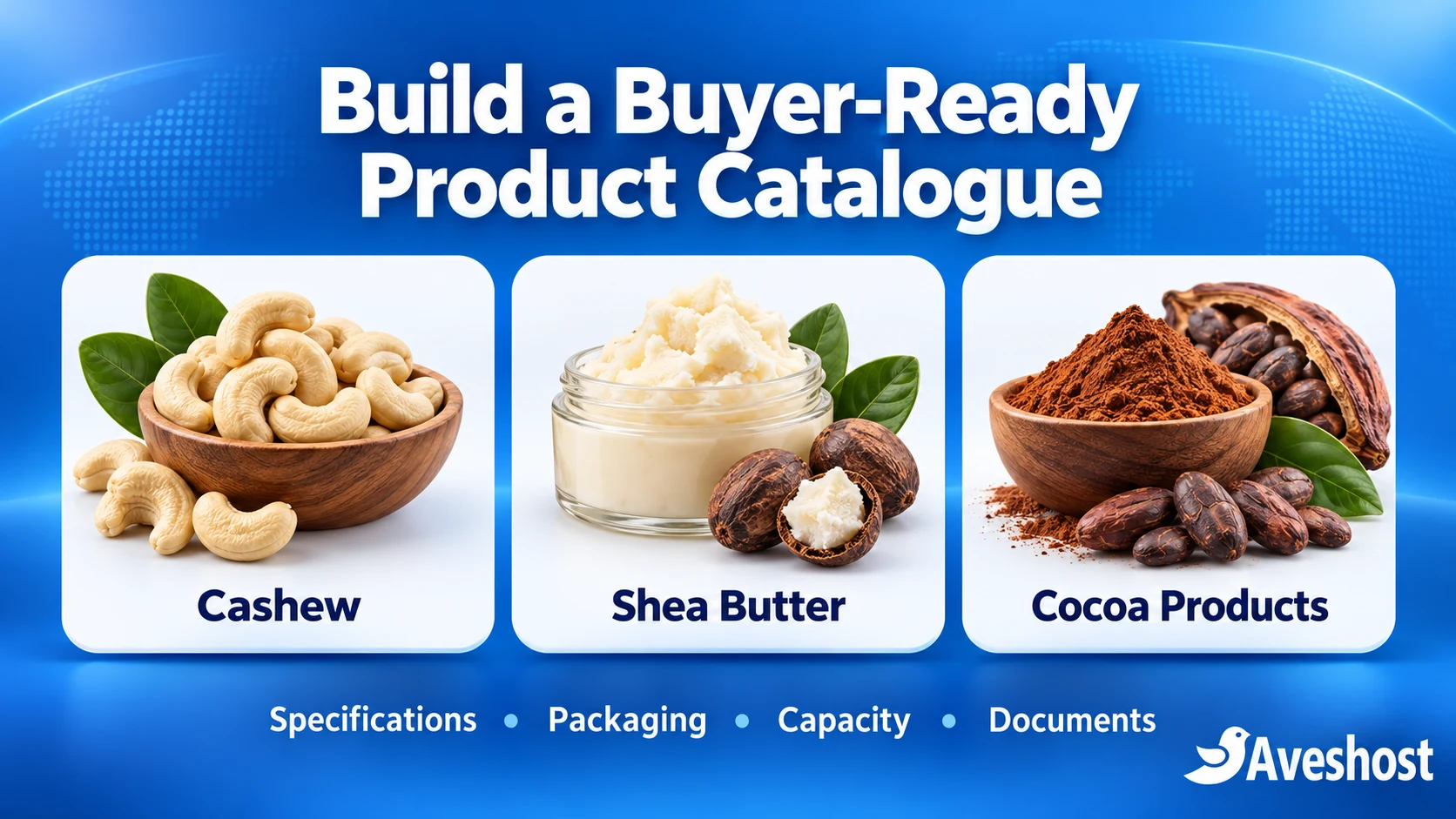
Create a separate page for each distinct product or specification. Identify raw cashew nuts versus kernels, refined versus unrefined shea butter, and the specific cocoa product you supply. Use photographs of your own goods, packaging and operations where possible.
| Product | Information to prepare |
|---|---|
| Cashew | Raw nuts or kernels, agreed grade, quality parameters, packaging and available volume |
| Shea butter | Refined or unrefined form, intended application, specification, packaging and batch documents |
| Cocoa products | Beans, powder, butter or other form; processing details, specification and permitted supply route |
Use a consistent specification format. Show measurement units, relevant test methods or reference documents, minimum order quantities, packaging options and realistic lead times. Distinguish typical information from the result for a specific batch.
Explain how buyers can request a sample and what happens after it is evaluated. Keep sample approval connected to the product specification and quotation. A photograph or an attractive description cannot replace the buyer’s quality checks.
If you publish capacity, review it with operations. Explain whether it is production capacity, available stock or supply you can arrange over a period. Keep that information current, especially during seasonal changes.
Only describe products as organic, certified or meeting a particular standard when your evidence supports the exact wording and scope. Use approved certification marks and explain which product, facility or activity the document covers.
Show your business identity and genuine documents
Give the buyer a clear picture of who operates the business. Include the legal business name, location, professional contact details and a concise explanation of your role in the supply chain. A processor, aggregator and trading company should each describe its work accurately.
- An About page explaining the business and its operations.
- A contact page with a working email address and responsible sales contact.
- Relevant registration or certification details that can be checked.
- Current photographs of products, packaging and facilities.
- A document process for specifications, test reports and commercial discussions.
Publish only documents suitable for public access. Review scans for personal identifiers, signatures, banking details and confidential customer information. Share sensitive due-diligence documents through controlled access after checking the recipient.
A certificate number or logo on a website should connect to a genuine, current record where verification is available. Keep expiry dates and document versions in your internal review process so that outdated material does not remain in the catalogue.
Explain traceability through the records your operation actually maintains. Give qualified buyers access to the relevant evidence for their proposed purchase without exposing confidential supplier or customer records publicly.
Build a request-for-quotation workflow
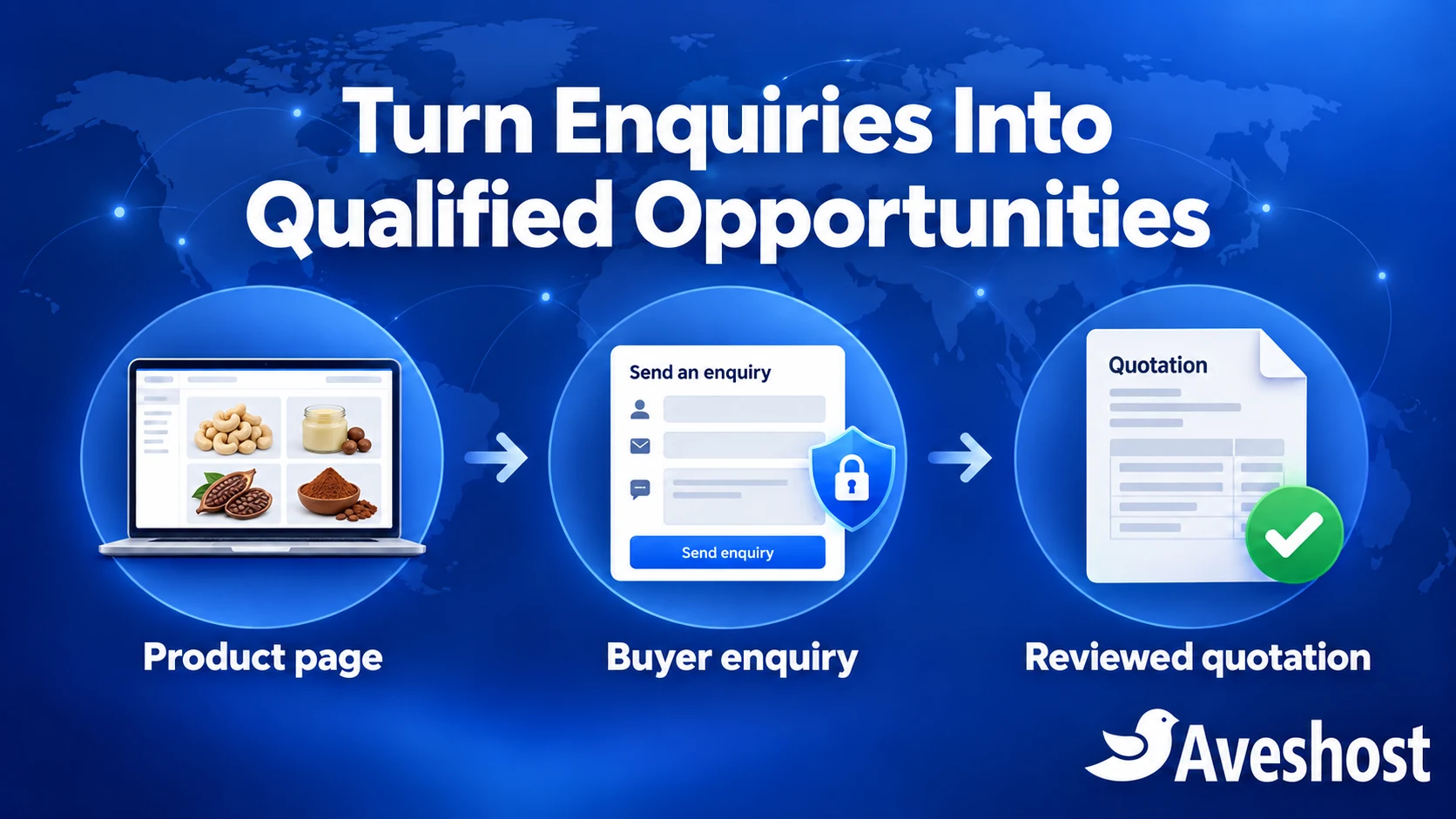
A good enquiry form gives your sales team enough context to respond. Keep required fields focused, and let buyers provide additional requirements when they have them.
- Buyer name, company, business email and destination country.
- Product and requested specification or grade.
- Quantity and unit, plus any repeat supply requirement.
- Packaging preference and intended use.
- Requested delivery date and destination.
- Sample request or relevant document requirements.
After submission, show a clear acknowledgement and send an enquiry reference. Route the request to the responsible staff member and store a record securely, so that an email delivery problem does not lose the opportunity.
Review the buyer and the request before sharing confidential documents or issuing a quotation. Check the company identity, the contact’s role and the consistency of the enquiry. Treat unusual urgency or changed payment instructions as a reason to verify through a known contact channel.
Prepare a quotation with the product specification, quantity, packaging, agreed delivery terms, named destination, validity period and payment conditions. Have the relevant staff review it before sending. Quote changes should remain traceable.
Use clear stages such as new enquiry, information needed, sample discussion, quotation issued and closed. Track why a request did or did not progress. This helps you improve the catalogue and focus sales work on suitable buyers.
Own your domain and professional email
Register the domain through Aveshost domain services and keep it in a business-controlled account. Use a readable name that matches your trading identity. A .com address is a familiar option for a commercial exporter; choose another extension when it fits the organisation and is easy for buyers to recognise.
Enable the available account protections and keep renewal contacts current. Record who owns the domain and hosting accounts so that the company can retain access when a developer or employee leaves.
Use a professional business email address for enquiries and quotations. Create individual staff accounts where appropriate, secure them with multi-factor authentication and set up your domain’s email authentication records.
Keep the website, quotations and sales messages consistent. Buyers should see the same business identity and contact details across the relationship. Verify requests to change bank or payment details through a trusted channel rather than relying on an email alone.
Choose Aveshost hosting for your export website
Our fully managed WordPress hosting supports a practical catalogue and enquiry website. The service includes WordPress maintenance features, automatic SSL, daily scheduled backups, staging and a CDN option for delivering cached content internationally.
| Managed WordPress plan | Websites | SSD storage | Monthly equivalent |
|---|---|---|---|
| Basic | 1 | 15 GB | GH₵30 |
| Professional | 2 | 35 GB | GH₵50 |
| Premium | 3 | 60 GB | GH₵80 |
Prices and product information were reviewed at the time of writing. Confirm the billing term and final total at checkout. Budget separately for development, premium extensions, translations and custom integrations.
Choose capacity around the workload: product pages, document downloads, enquiry volume and any private buyer area. When your portal needs custom services or integrations, discuss our fully managed VPS hosting with our team.
Our fully managed VPS service includes a DirectAdmin licence at no additional cost. Define the application and management scope before ordering so that the deployment suits your portal and your internal processes.
Make the portal fast for global visitors
Test your export business website in Ghana from the countries you want to reach. International visitors need quick access to product pages and a responsive enquiry form. Server location, network conditions, page weight and application code all affect that experience.
Use the CDN for suitable public assets such as product photographs, styles and downloadable brochures. Cache public catalogue pages where appropriate, while keeping buyer accounts, private documents and personalised responses out of shared public caching.
Compress images, provide correctly sized versions and reserve their display dimensions. Keep videos optional instead of forcing a large autoplay file onto the homepage. Put essential specifications in the page so that buyers can read them without opening a heavy document.
Google’s Core Web Vitals guidance sets good-experience targets of LCP within 2.5 seconds, INP at or below 200 milliseconds and CLS at or below 0.1, evaluated at the 75th percentile of visits. Use these as performance targets and review real visitor data as it becomes available.
Check mobile and desktop experience, including enquiry submission and downloads. Our guide to making WordPress load faster provides a practical optimisation checklist. Measure after changes rather than relying only on the speed of a connection in your office.
Help buyers find the right product pages
Write each product page for the terms a relevant buyer would use. Specific phrases such as Ghana cashew kernels supplier or Ghana unrefined shea butter exporter help describe the offer more clearly than a page titled Our Products.
Use informative page titles, short readable URLs and headings that match the content. Include origin, product form, specifications and supply information naturally. Keep important catalogue pages accessible to search engines, while protecting private areas and confidential documents.
Start with clear English content. Add translations when your target buyers need them and your team can maintain them. Have product specifications and commercial wording reviewed so that a translation does not change the offer.
Connect trade-show follow-up and referrals to the exact relevant product page. Give a buyer the page for the product discussed, rather than asking them to search through the homepage again. Keep campaign links and downloadable sheets consistent with your current catalogue.
A portal helps buyers assess your business and contact you. Continue the wider sales work: market research, relevant trade events, relationships and timely follow-up. Measure qualified enquiries rather than counting every form submission as a sales opportunity.
Test the portal and follow up on qualified enquiries
Before launch, test the site as a buyer and as the staff member responsible for responding. Use fictional enquiries and test files while reviewing the workflow.
- Catalogue: verify product forms, specifications, units, packaging and current supply information.
- Documents: check versions, scope, expiry and access permissions.
- Enquiries: submit requests from mobile and desktop, and confirm storage and staff routing.
- Email: test acknowledgements and sales notifications, including failure handling.
- Performance: check representative overseas locations and mobile connections.
- Security: review staff permissions, uploaded files, spam protection and software updates.
- Recovery: restore a backup in a safe test environment and verify enquiry records.
- Ownership: confirm that the business controls its domain, hosting and key accounts.
Set a maintenance routine after launch. Assign someone to update the catalogue, review documents, monitor failed forms and track unanswered enquiries. Keep access tied to staff roles, and remove it promptly when responsibilities change.
If a buyer portal accepts uploads, restrict file types and size, scan where appropriate and keep files outside public executable directories. Private quotation or buyer documents should require an access check each time they are requested.
When you are ready to build an export business website in Ghana, discuss your project with Aveshost. Share your product range, target markets, catalogue needs and enquiry workflow. We can help you plan the website, hosting and integrations for your business.
Frequently asked questions
What should an export business website in Ghana include?
Include clear product specifications, packaging, supply information, business identity, relevant document details and a working request-for-quotation process. Build the content around the buyers and product uses you serve.
Does having a website replace GEPA registration?
Your website supports buyer checks and marketing. Maintain the relevant exporter registration, crop-specific approvals and shipment documentation separately, and confirm the requirements for your business and products with the responsible authorities.
Can cashew and shea exporters use the same approval process?
Check the requirements for your product form and activity. TCDA’s directive covers permits for specified unprocessed tree crops, while processed products and destination markets can have additional or different requirements.
Can I present cocoa beans like any other online product?
Describe your authorised role accurately. Cocoa bean marketing operates within the COCOBOD and CMC framework. Distinguish beans from processed cocoa products and verify the applicable supply route before publishing an offer.
Should my B2B export portal have instant checkout?
A catalogue and quotation workflow is often suitable when specification, volume and delivery terms need review. Add checkout when the products, pricing and order rules are standardised and the business can operate the process reliably.
What should a buyer enquiry form ask for?
Ask for company and contact details, the product specification, quantity, destination, packaging and delivery needs. Give the buyer an enquiry reference and assign the request to the responsible staff member.
Should certificates and business documents be public?
Publish only information appropriate for public access. Share confidential due-diligence material with checked recipients through controlled access, and review scans for personal or sensitive details before sharing.
How does a CDN help an export website?
A CDN can deliver cached public assets closer to international visitors. Combine it with optimised pages and protect private content from public caching. Test actual performance in your target markets.
Which Aveshost hosting option suits a product catalogue?
Our fully managed WordPress hosting is a practical option for a catalogue and enquiry site. Discuss VPS hosting with our team when you need custom services, more demanding workloads or application integrations.
Can Aveshost build a B2B exporter website?
Yes. Contact our support team with your products, target markets, document needs and buyer enquiry process. We can help you plan the website, hosting and integration work.




